If you have been arrested or charged with a criminal offence in the GTA, the steps you take now matter. Our criminal defence lawyer represents people charged with summary, hybrid and indictable offences, from the bail hearing to the final outcome, with service in English, Cantonese, Mandarin and Korean.
A criminal charge can affect your job, your immigration status, your ability to travel and your family. Our role is to protect your rights from the start, test the Crown's evidence and work towards the best realistic outcome, whether that is a withdrawal, a diversion program, a peace bond, a discharge, an acquittal at trial or a sentence that lets you move on.
We appear in the Ontario Court of Justice and the Superior Court of Justice in Toronto, York Region (Newmarket), Peel (Brampton) and Durham (Oshawa). Clients meet us at our Markham or North York office or by video, and we explain every step in plain language and in your preferred language.
Criminal matters are handled by our lawyer. A licensed paralegal's scope in criminal court is limited by the Criminal Code and the Law Society of Ontario, so when you retain us for a criminal charge we will confirm in writing who is representing you.
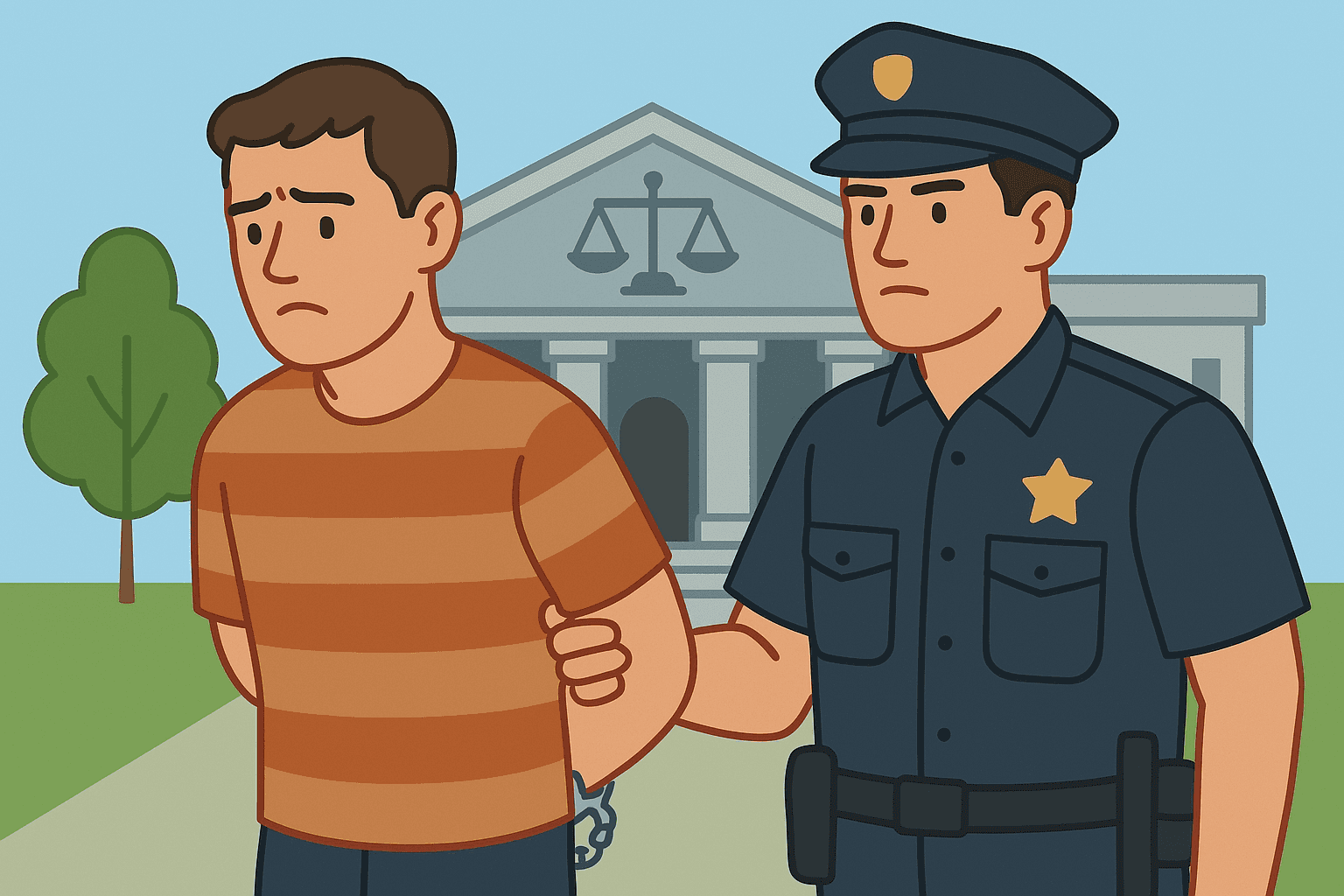
Under the Criminal Code, offences fall into three groups. The type of offence decides which court hears the case, the maximum penalty and whether you can choose a jury.
The least serious offences, such as causing a disturbance. They are tried in the Ontario Court of Justice by a judge alone and, since 2019, generally carry a maximum of two years less a day in jail and/or a fine of up to $5,000.
Most common charges, including assault, theft under $5,000, mischief, uttering threats and impaired driving. The Crown chooses whether to proceed summarily or by indictment, which affects the penalty range and your trial options.
The most serious charges, such as robbery, aggravated assault and fraud over $5,000. For many indictable offences you can elect a trial in the Ontario Court of Justice, or in the Superior Court of Justice with a judge alone or a judge and jury.
Simple assault, assault causing bodily harm, assault with a weapon and domestic allegations, including no-contact conditions.
Shoplifting, theft under and over $5,000, fraud and possession of property obtained by crime.
Impaired operation, blood alcohol over the legal limit, refusing a breath or drug demand, and dangerous driving.
Threats made in person, by phone or online, criminal harassment and related peace bond applications.
Damage to property, mischief to data and break and enter.
Possession and possession for the purpose of trafficking under the Controlled Drugs and Substances Act.
Failure to comply with bail conditions, undertakings, probation orders and failing to attend court.
Young people aged 12 to 17 are dealt with under the Youth Criminal Justice Act, which has its own sentencing and record rules.
Police may release you with an appearance notice or undertaking, or hold you for a bail hearing, which must generally happen within 24 hours. At a bail hearing we argue for release on the least onerous conditions the law allows.
Your first court date is administrative. The Crown provides disclosure, meaning the evidence against you, which we review in detail for weaknesses and Charter issues such as unlawful searches or delay.
We meet the Crown to discuss the case. Depending on the evidence and your background, options can include a withdrawal, diversion, a peace bond or a negotiated plea to a lesser charge.
If the case goes to trial, the Crown must prove guilt beyond a reasonable doubt. If you plead guilty or are found guilty, we present a sentencing position that can include an absolute or conditional discharge, which does not result in a conviction.
A criminal finding can have consequences that last longer than the sentence. Permanent residents and other non-citizens can face immigration consequences, including inadmissibility, so your status must be considered before any plea. We can coordinate with your immigration lawyer.
A conviction can also affect employment, professional licences, travel to the United States and child custody matters. A discharge, diversion or withdrawal can avoid a conviction, and a record suspension may be available later through the Parole Board of Canada.

Criminal Defence Lawyer
Ryan earned a BA in Justice, Political Philosophy and Law from McMaster University and his Juris Doctor from Western Law. He regularly appears in the Ontario Court of Justice and the Superior Court of Justice.
View Ryan's profile →Generally no, not before speaking to a lawyer. Anything you say can be used as evidence, and well-meaning explanations often hurt more than they help. Politely say you wish to speak to a lawyer.
Not automatically. In Ontario only the Crown can withdraw a charge, and in domestic cases the Crown often continues even if the complainant does not want to proceed. We can make submissions to the Crown on your behalf.
A conviction results in a criminal record. A withdrawal, a stay or an acquittal does not. An absolute or conditional discharge is not a conviction, and under the Criminal Records Act the record of it should not be disclosed after one year (absolute) or three years (conditional).
Often yes. Conditions such as a no-contact order, a curfew or a residence requirement can sometimes be varied with the Crown's consent, or through a bail review if the Crown does not agree.
It depends on the charge, the amount of disclosure and whether the case goes to trial. After your case evaluation we give you an upfront fee estimate, and many matters can be handled on a staged or flat-fee basis.
Yes. Our team serves clients in English, Cantonese, Mandarin and Korean, and you are entitled to a court interpreter at your hearings.
Speak to us before your first court date. Your evaluation is confidential and there is no obligation.
Lawyers and licensed paralegals in Ontario are regulated by the Law Society of Ontario. Our lawyer handles criminal matters, while our licensed paralegal handles matters within the paralegal scope of practice, such as traffic tickets, Landlord and Tenant Board hearings and Small Claims Court cases.
