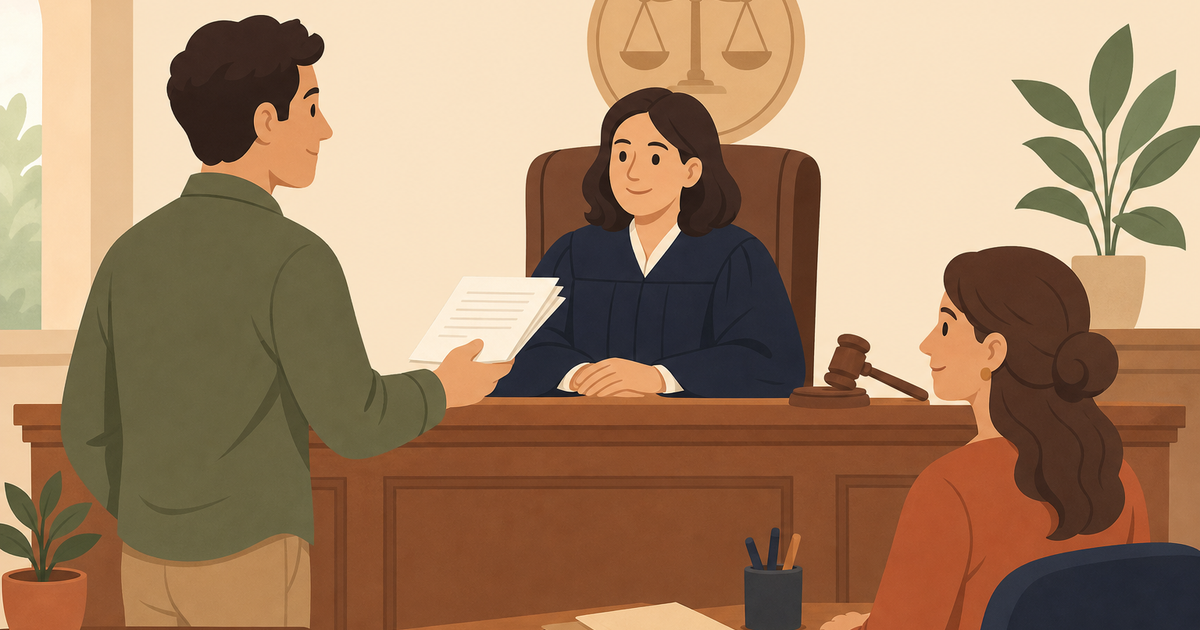
Someone owes you money and will not pay. A contractor took a deposit and disappeared. A tenant left damage behind, or a customer's cheque bounced. For disputes like these, Ontario's Small Claims Court — a branch of the Superior Court of Justice — is designed to be faster, cheaper, and less intimidating than a full civil lawsuit.
For small business owners and individuals across the Greater Toronto Area, it is often the most practical way to be heard.
This is the question everyone asks, and the answer recently changed. As of October 1, 2025, the monetary limit in Ontario's Small Claims Court is $50,000, up from the previous $35,000. That limit is exclusive of interest and costs.
A few practical points:
Small Claims Court handles disputes about money owed or the return of personal property, including:
It is not the place for matters like real-estate ownership disputes, defamation handled in higher courts, or family law — those go elsewhere.
The process is designed to be navigable, but the steps and deadlines are real:
Small claims cases are won or lost on preparation — your documents, your witnesses, and how clearly you present them. Showing up with a shoebox of receipts and no organized story is the fastest way to lose a winnable case.
A judgment is a court's confirmation that you are owed money — it is not the money itself. If the other side does not pay voluntarily, you may need enforcement tools such as garnishing wages or a bank account, or a writ of seizure and sale against property. Before you spend time and filing fees suing, it is worth asking a hard question: if I win, can this person or business actually pay? Assessing collectability up front saves a lot of wasted effort.
Ontario law generally gives you a limited window — commonly two years from when you discovered the claim — to start a proceeding. Wait too long and you can lose the right to sue entirely, no matter how strong the claim. If you think you have a claim, do not sit on it.
A note on costs: Small Claims Court keeps legal costs awards modest by design, so it is not a venue where the loser typically pays the winner's full legal bill. That is part of what keeps it accessible.
This article is general information only and is not legal advice. Every case turns on its own facts.
Whether you are chasing an unpaid debt or defending a claim, preparation decides the outcome. At WP Legal Professional, our licensed paralegals act for plaintiffs and defendants throughout the Small Claims Court process, from filing through trial, serving clients in English, Cantonese, Mandarin, and Korean.
Act now. Contact us for a confidential consultation about your dispute.