
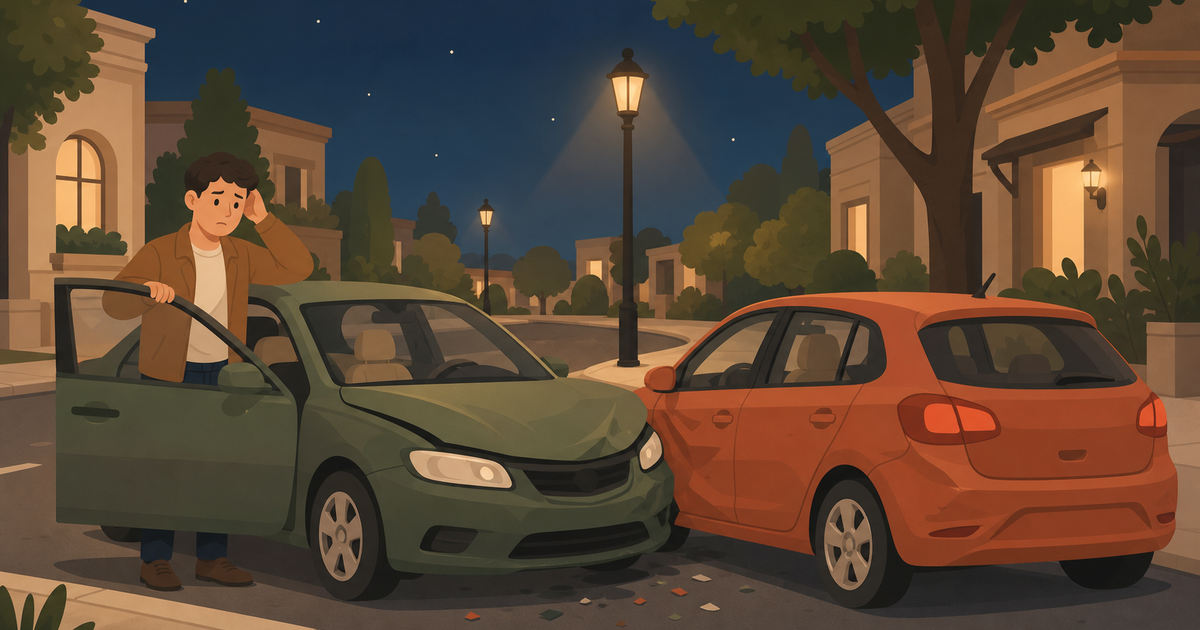
It is late, the road is quiet, and there is a sudden bump — a clipped mirror, a scrape against a parked car, a fender that touches another bumper. In that moment many drivers feel a wave of panic and a single impulse: just keep going. It is one of the most dangerous decisions you can make on an Ontario road, because leaving the scene of a collision is its own offence — and depending on the circumstances, a far more serious one than the original accident.
What many drivers do not realize is that "failing to remain" exists in two separate bodies of law, and they carry very different consequences.
Under Ontario's Highway Traffic Act, every driver involved in an accident has a legal duty to remain at — or return immediately to — the scene. This is the provincial, regulatory version of the offence: the kind that is prosecuted in the same provincial offences courts that handle speeding and other traffic charges.
Under the Criminal Code of Canada (section 320.16), it is a criminal offence to operate a vehicle, know or be reckless about whether it was involved in an accident, and then fail without reasonable excuse to stop, give your name and address, and offer assistance if someone has been injured. This is not a traffic ticket. It is a criminal charge that can result in a criminal record.
The Criminal Code treats failing to stop after an accident as a hybrid offence, meaning the Crown can choose to proceed by the more serious indictable route or by summary conviction. The maximum penalties escalate sharply with the harm involved: the basic offence under section 320.16(1) carries a maximum of up to ten years' imprisonment when prosecuted by indictment; where the accident caused bodily harm the maximum rises to fourteen years; and where it resulted in death, the offence can carry a sentence up to imprisonment for life.
Those are maximums, not the sentence in a typical case — but they show how seriously Parliament treats a driver who knowingly leaves people behind after a crash. A criminal conviction also brings consequences that no traffic fine does: a permanent record that can affect employment, travel, and, for newcomers, immigration status.
A key feature of the Criminal Code offence is that the driver must know of the accident, or be reckless as to whether one occurred. A genuine, reasonable lack of awareness — you truly did not feel or notice a minor contact — is part of what the Crown has to disprove. This is exactly the kind of issue that turns a case, and it is why the facts of each collision matter so much.
The safest course is also the simplest: stop, stay, and exchange information. Provide your name, address, and the details of your vehicle and insurance to the other driver or to anyone whose property was damaged. If someone is hurt, stay and help, and call the authorities. Leaving — even out of fear or confusion — risks converting a manageable accident into a charge that follows you for years.
Do not assume the case is hopeless, and do not assume it is trivial. Whether you are facing the provincial Highway Traffic Act charge or the Criminal Code offence changes the entire strategy, the stakes, and the court you appear in. The Crown still has to prove its case — including that you knew about the accident — and there are often real defences and resolutions available. The most important step is to get advice early, before your first court date.
This article is general information only and is not legal advice. Every case turns on its own facts.
A charge for leaving the scene of a collision can put your licence, your record, and sometimes your status in Canada at risk. At WP Legal Professional, we defend Highway Traffic Act charges and summary criminal matters in courts across the Greater Toronto Area, and we serve clients in English, Cantonese, Mandarin, and Korean.
Act now. Contact us for a confidential consultation before your first court date, or learn more about our traffic ticket defence services.