
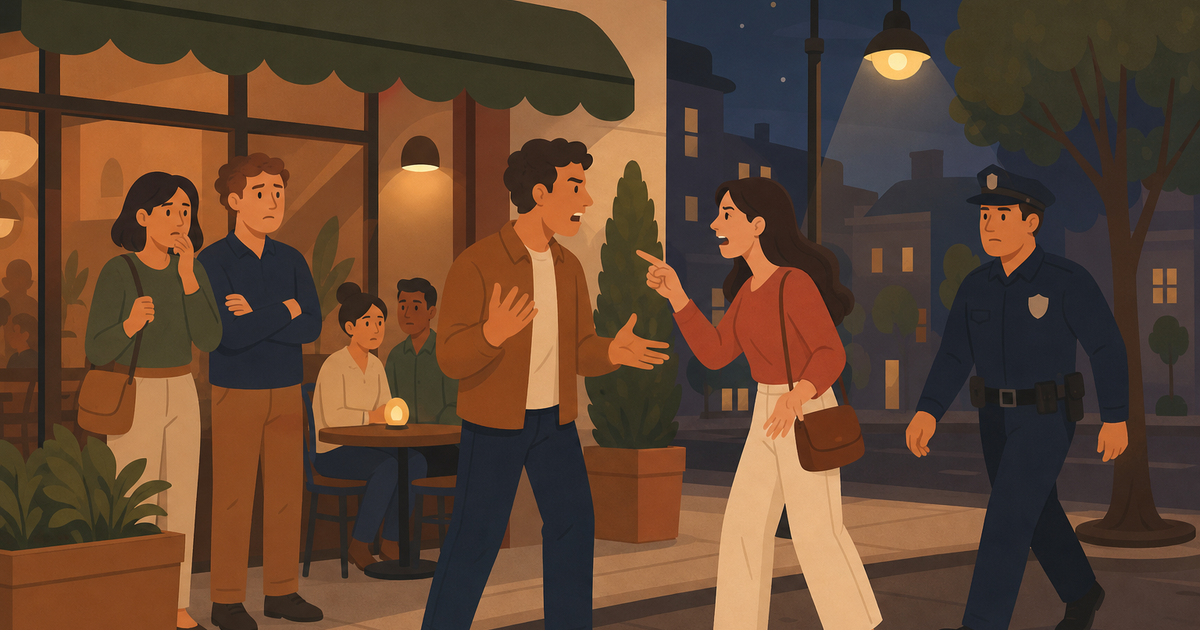
It often starts with something small: an argument outside a restaurant at closing time, a few too many drinks and a loud scene on the sidewalk, a confrontation in a parking lot that drew onlookers. Police arrive, tempers are high, and someone leaves with a charge of causing a disturbance. Many people assume it is the equivalent of a noise ticket. It is not — it is a charge under the Criminal Code of Canada, and it deserves to be taken seriously.
Section 175 of the Criminal Code makes it an offence to cause a disturbance in or near a public place — while not being inside a dwelling-house — by:
The section also covers related conduct such as loitering in a public place in a way that obstructs others, and disturbing the peace of people inside a home through disorderly conduct.
Two things matter here. First, the conduct must actually cause a disturbance — courts have made clear that noise or bad language alone is not enough; there must be an externally observable interference with the public's use of the area. Second, the law even allows a court, in some circumstances, to infer that a disturbance occurred from the evidence of a police officer alone — so "nobody complained" is not the automatic defence people assume it is.
Causing a disturbance is punishable on summary conviction, the less serious track of criminal offences. That makes it exactly the kind of charge our firm focuses on — and it also means people underestimate it. A conviction still produces a criminal record, and for international students, work permit holders, and permanent residence applicants, any criminal record can create immigration complications far out of proportion to the incident itself.
Precisely because the charge sits at the minor end of the Criminal Code, there is often room to resolve it without a conviction. Depending on the circumstances and the accused's history, options can include diversion programs, peace bonds, or withdrawal of the charge — and at trial, the Crown must prove every element, including that a genuine disturbance occurred. What you should not do is plead guilty at an early appearance just to "get it over with," without understanding what a record will mean for your future.
Stay calm, do not argue your case to the police at the scene, and write down what happened — including who was present — while it is fresh. Then get advice before your first court date. A charge that began as one bad night should not follow you for years.
This article is general information only and is not legal advice. Every case turns on its own facts.
At WP Legal Professional, our licensed paralegals defend summary conviction charges — including causing a disturbance — in courts across the Greater Toronto Area, serving clients in English, Cantonese, Mandarin, and Korean. Learn more about our criminal charge defence services.
Act now. Contact us for a confidential consultation before your first court appearance.